
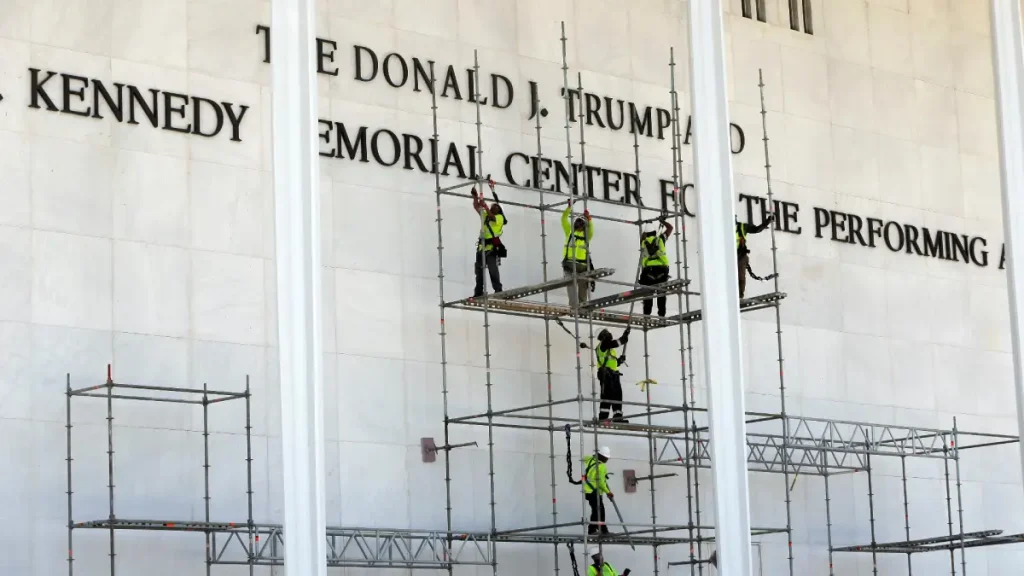
The cultural and political landscape of the nation’s capital is witnessing an intense institutional battle over public memorial rights. Legal proceedings culminated in a dramatic shift when workers began removing alternative branding elements from the facade of Washington’s leading performing arts venue. This swift physical action followed a highly anticipated appellate ruling regarding the ongoing Kennedy Center name dispute.
The fast-moving development in the Kennedy Center name dispute marks a definitive enforcement of statutory boundaries regarding national landmarks. After a panel of federal judges firmly rejected an emergency request to delay a lower court’s enforcement order, administrators were forced to comply with immediate physical adjustments. The dramatic overnight removal highlights the complex legal friction currently existing between executive oversight and legislative authority.
The Legal Foundations of the Judicial Decision
To fully comprehend the mechanics of the Kennedy Center name dispute, one must examine the baseline congressional mandates that govern the landmark. Originally designated by Congress as a living memorial to the nation’s 35th president, the venue’s formal title is legally anchored in federal statute. The presiding district judge previously clarified that institutional trustees overstepped their authority by attempting a unilateral renaming campaign.
Furthermore, the subsequent appellate confirmation in the Kennedy Center name dispute thoroughly reinforced the core constitutional principle that only Congress possesses the power to modify such designations. The Justice Department’s arguments, which framed the addition as merely a secondary title, failed to convince the judicial panel. This critical ruling establishes a strict legal precedent protecting historical federal monuments from unauthorized administrative changes.
How the Bipartisan Board Triggered the Crisis
The intense public friction surrounding the Kennedy Center name dispute originally ignited following a controversial, unanimous vote by the board of trustees. The newly reconstituted administrative board sought to append the alternative title to the building’s exterior, sparking instant backlash from preservationists. This sharp shift in operational posture immediately divided regular patrons and local political figures.
Consequently, the localized branding alteration fueled the Kennedy Center name dispute by positioning the venue at the center of broader national culture debates. Opponents of the modification quickly noted that the updated exterior signage severely compromised the building’s original intent as a unified memorial space. This strategic pushback ultimately set the stage for a high-stakes courtroom battle over the facility’s identity.
The Role of Legislative Challengers in the Lawsuit
The formal legal challenge that successfully accelerated the Kennedy Center name dispute was initiated by a prominent congressional representative serving on the board. Acting in an ex-officio capacity, the lawmaker filed a comprehensive lawsuit to aggressively block the renaming efforts and protect structural transparency. The legal team argued that the administration was attempting to unlawfully bypass traditional legislative review.
This aggressive legislative intervention effectively prevented the alternative branding from becoming a permanent fixture of the Washington landscape. The plaintiff’s lawyers successfully demonstrated that allowing unapproved signage to remain during prolonged appeals would cause irreparable public confusion regarding the monument’s true identity. Their swift victory underscores how checks and balances can actively resolve a complex Kennedy Center name dispute.
Impact on Institutional Ticket Sales and Fundraising
Beyond the pure constitutional arguments, the ongoing Kennedy Center name dispute has exerted a noticeable financial strain on daily entertainment operations. Internal institutional tracking reports revealed that ticket sales had dropped to some of their lowest levels in recent history during the controversy. Multiple prominent performers and musicians also publicly withdrew from scheduled appearances to express solidarity with preservationists.
Conversely, defense attorneys involved in the Kennedy Center name dispute argued that removing the alternative name would severely harm ongoing capital fundraising initiatives. The government asserted that certain major private donors had specifically committed substantial financial resources based on the updated title. Resolving these conflicting economic pressures continues to remain a highly delicate administrative challenge for the executive director.
Halting the Planned Two-Year Facility Closure
An equally significant component of the judicial ruling linked to the Kennedy Center name dispute was the formal blocking of a proposed multi-year shutdown. The board had previously approved plans to completely halt public performances starting next month to facilitate major structural renovations. However, the court determined that the board was derelict in its responsibilities when reviewing the shutdown.
By pairing the signage order with an explicit injunction against the total operational closure, the court thoroughly protected active programming schedules. While necessary structural repairs regarding water intrusion can legally proceed, a blanket two-year hiatus is officially off the table. This double-sided victory ensures the venue continues to fulfill its primary function as a vibrant public monument.
Conclusion
The physical removal of the alternative lettering marks a profound, historic milestone within the broader Kennedy Center name dispute. By refusing to pause the lower court’s strict deadline, the federal appellate court validated the absolute supremacy of congressional statutory definitions over unilateral board decisions. While the underlying legal battle will continue through formal briefing phases, the building’s facade has successfully returned to its historic baseline.
Frequently Asked Questions
What was the main cause of the recent Kennedy Center name dispute?
The controversy erupted after the board of trustees voted to add an alternative name to the iconic living memorial without seeking congressional approval.
Why did the federal courts order the immediate removal of the new signage?
Judges ruled that Congress explicitly established the venue’s name by law, meaning only the legislative branch possesses the authority to change it.
Did the court decision affect the planned two-year renovation closure?
Yes, the same judicial order that addressed the Kennedy Center name dispute also blocked the administration’s plans to shut down entertainment operations.
How did the ongoing branding controversy impact the center’s financial performance?
The institution experienced a notable decline in general ticket sales alongside public boycotts from several high-profile performers and musicians.
What is the next legal step for the administration following the signage removal?
While the physical letters have come down, the administration is currently preparing to file formal legal briefs to continue the appeals process.