
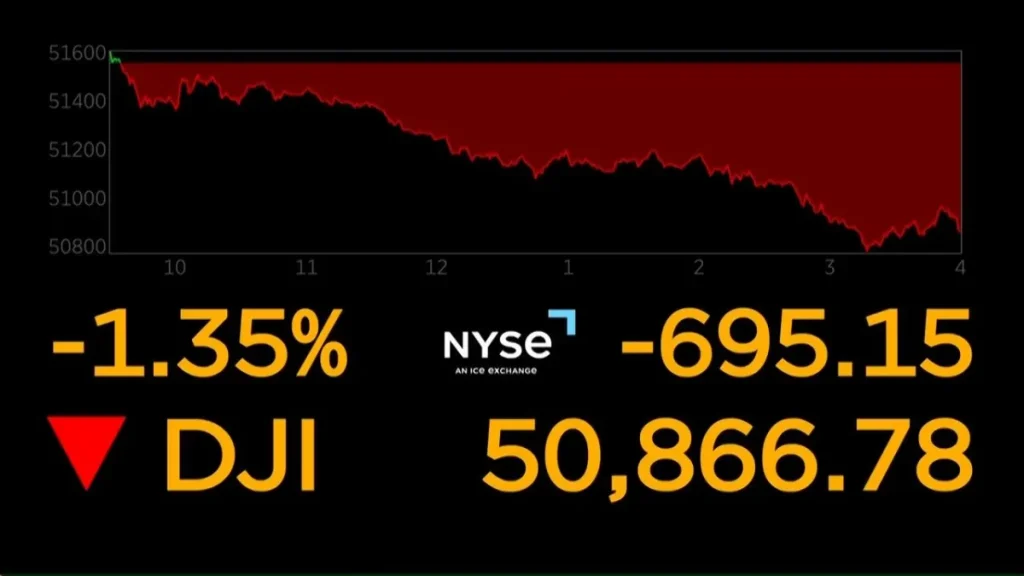
The global equity market experienced its most severe single-day contraction in months as structural economic data completely upended investor expectations. Wall Street indexes plummeted sharply into negative territory, heavily catalyzed by an aggressive Big Tech selloff. This abrupt multi-index retreat followed a surprisingly resilient domestic employment update, which instantly heightened macro anxieties regarding tighter monetary policy.
The deep corporate retrenchment across trading floors highlights how sensitive high-multiple growth equities remain to macroeconomic shifts. The benchmark S&P 500 benchmark slid 2.6 percent, recording its steepest single-session drop since October, while the tech-heavy Nasdaq Composite plunged 4.2 percent. The sudden velocity of the Big Tech selloff effectively snapped a spectacular multi-week winning streak for major indices.
May Payrolls Blast Past Analytical Forecasts
The primary economic catalyst triggering the market turbulence was the official release of the May nonfarm payrolls report by the Labor Department. Financial analysts and institutional economists had broadly forecasted a modest expansion of roughly 105,000 new jobs for the month. Instead, the resilient domestic economy added a surprising 172,000 jobs, demonstrating robust hiring across diverse corporate sectors.
This massive data beat instantly reshaped how international investment funds evaluate upcoming central bank meetings. Because persistent labor market strength typically fuels broader wage inflation, the report completely eliminated any lingering hopes for near-term monetary easing. Instead of anticipating upcoming relief, traders were forced to aggressively price in elevated Big Tech selloff risks linked to high borrowing costs.
Semiconductor Giants Bear the Brunt of the Decline
The pain inflicted by the sudden shift in interest rate expectations was highly concentrated within the high-flying semiconductor sector. Artificial intelligence darlings that had comfortably powered public markets to consecutive record highs over the spring bore the absolute brunt of the drop. The cascading Big Tech selloff erased billions in collective market value from premium hardware manufacturers within minutes.
Specifically, market leader Nvidia slumped 6.2 percent, Broadcom dropped 7.9 percent, and Micron Technology plummeted a staggering 13.3 percent. Financial strategists noted that these specialized companies had become technically overextended relative to their baseline earnings frameworks. When macro metrics shifted, automated trading systems quickly accelerated the Big Tech selloff to heavily lock in existing fiscal year profits.
Meta Outlines Massive Infrastructure Expenditures
Adding substantial momentum to the localized market slide were separate corporate announcements regarding long-term capital allocation strategies. Social media titan Meta Platforms saw its shares slide 5.5 percent following widespread reports that the enterprise may pursue a major new stock offering. The specialized fundraising effort is reportedly designed to secure capital for expanding artificial intelligence infrastructure.
The prospect of imminent share dilution during a broader Big Tech selloff severely dampened investor enthusiasm for social media equities. While immense spending on compute infrastructure is necessary to win the global AI race, institutional portfolios reacted uneasily to the sudden cash requirement. This capital anxiety further validated fears that the ongoing tech boom is becoming an exceptionally expensive corporate initiative.
Treasury Yields Surge Following the Labor Update
The far-reaching ripples of the unexpected employment data were felt with extreme intensity across the international fixed-income landscape. Bond yields surged immediately after the morning data hit the wires, reflecting a highly hawkish realignment among fixed-income traders. Higher yields directly intensify the Big Tech selloff by providing investors with attractive, risk-free alternative returns.
The yield on the 10-year Treasury note jumped up to 4.54 percent, while the policy-sensitive 2-year Treasury yield skyrocketed to 4.16 percent. Financial experts emphasize that the CME FedWatch tool now shows a better than 60 percent probability of a rate hike by year-end. This severe statistical adjustment proves that market participants are braceing for a prolonged period of tightened financial conditions.
Anxieties Intensify Ahead of the Next Federal Meeting
The sudden macro dislocation occurs at a highly delicate time for the newly restructured Federal Open Market Committee. The upcoming policy review marks the absolute first meeting overseen by newly appointed central bank Chairman Kevin Warsh. The strong jobs data ensures the incoming leadership will face immense structural pressure to maintain a strictly hawkish policy posture.
While executive branches frequently advocate for lower borrowing costs to support domestic growth, the central bank must prioritize long-term price stability. The persistent strength shown in the May employment data confirms that underlying inflationary pressures remain stubbornly active across consumer markets. Navigating the post-report landscape during a Big Tech selloff requires a highly disciplined, data-dependent approach from policymakers.
Conclusion
The deep market correction underscores the stark economic reality that an exceptionally strong labor market can serve as a double-edged sword for public equities. By adding a surprising 172,000 jobs in May, the economy has effectively forced investors to abandon their expectations for imminent interest rate cuts. As the resulting Big Tech selloff rebalances premium valuations across the semiconductor sector, long-term success will belong to organizations capable of delivering real profitability independent of central bank interventions.
Frequently Asked Questions
What was the main reason behind the massive stock market decline on Friday?
The slump was directly triggered by a severe Big Tech selloff coupled with a surprisingly hot May jobs report that increased the odds of higher interest rates.
How many jobs did the U.S. economy add compared to initial expert consensus?
The Labor Department reported an addition of 172,000 jobs in May, blowing past the conservative analytical consensus forecast of 105,000.
Which specific technology companies experienced the absolute largest losses?
The downturn severely hit hardware firms, with Micron dropping 13.3%, Broadcom falling 7.9%, and Nvidia sliding 6.2% intraday.
Why did Meta Platforms stock experience a sharp 5.5 percent drop?
Meta dropped following reports that it may launch a new stock offering to raise capital for extensive artificial intelligence infrastructure developments.
How did the fixed income bond market respond to the latest employment data?
Bond yields surged dramatically, with the 2-year Treasury yield jumping to 4.16% as market expectations shifted decisively toward potential rate hikes.