
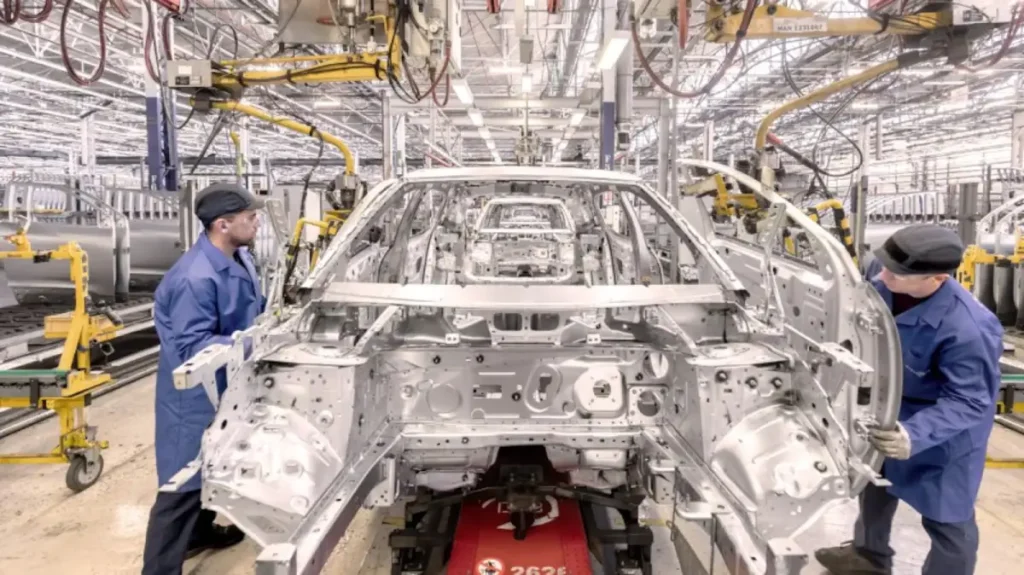
The delicate commercial balance between European regulators and foreign automotive giants is fracturing under the weight of escalating protectionist policies. As the European Commission aggressively looks to shield local factories, a frantic race for localized manufacturing space has broken out across the continent. Chinese automakers are shifting operations to beat structural compliance parameters introduced under the looming EU Industrial Accelerator Act.
This rapid transition from exporting fully assembled models to aggressively acquiring physical real estate highlights a profound change in corporate expansion playbooks. For years, overseas brands relied on low-cost domestic manufacturing hubs to successfully capture nearly 10 percent of European vehicle registrations. However, the imminent rollout of the EU Industrial Accelerator Act means localized manufacturing is a mandatory threshold for market access.
The Strict Operational Barriers of the New Bill
To fully grasp the urgency gripping foreign executive boards, one must dissect the highly restrictive provisions woven into the EU Industrial Accelerator Act. The draft legislation explicitly targets foreign investment originating from nations that control more than 40 percent of global capacity in key technology sectors. For these specific entities, the regulatory framework imposes a strict 49 percent foreign ownership cap on European operations.
Furthermore, the aggressive terms of the EU Industrial Accelerator Act mandate that at least half of the local factory workforce must consist of EU citizens. Foreign firms are also legally compelled to license vital intellectual property to European entities and source 70 percent of non-battery components locally. These rigid local content requirements effectively ensure that foreign brands cannot simply operate assembly lines using cheap imported parts.
A Decisive Strategy Shift From Building to Buying
Faced with a highly compressed legislative timeline, automakers are entirely abandoning traditional, time-consuming greenfield factory construction initiatives. Because building a new facility from scratch requires up to four years, companies cannot beat the mid-2027 enforcement deadline. Complying with the EU Industrial Accelerator Act demands a tactical pivot toward immediate factory acquisitions and asset retrofitting.
Industry insiders explain that retrofitting an existing, underutilized assembly plant can be accomplished within a narrow 12 to 18-month window. Consequently, Chinese brands are aggressively pursuing legacy European carmakers who possess excess industrial space but suffer from slumping consumer demand. This light-asset operational model serves as the absolute fastest pathway to achieve compliance before the EU Industrial Accelerator Act takes effect.
Spain and Hungary Emerge as Primary Automotive Hubs
The geographic concentration of this factory gold rush has transformed specific southern and eastern European regions into high-stakes development zones. Frontrunner BYD is rapidly finalizing a massive, multi-billion-dollar assembly complex in Szeged, Hungary, aiming for an initial fourth-quarter production rollout. Simultaneously, the company is actively scouting secondary locations across Southern Europe to secure immediate market insulation from the EU Industrial Accelerator Act.
Meanwhile, Spain has emerged as an exceptionally popular destination for collaborative automotive joint ventures due to its robust existing supply chains. Leapmotor is officially scheduled to commence vehicle assembly at Stellantis’ Zaragoza facility, effectively leveraging localized equity partnerships to clear regulatory hurdles. This collaborative manufacturing structure provides immediate protection against the impending EU Industrial Accelerator Act while preserving regional jobs.
Closing the Lucrative Plug In Hybrid Tariff Loophole
The frantic push to establish localized manufacturing bases is further accelerated by separate, fast-moving trade enforcement actions in Brussels. Following the implementation of steep 45 percent duties on pure battery electric imports, foreign brands successfully pivoted to exporting plug-in hybrids. However, regulators are already moving to aggressively close this open flank via the EU Industrial Accelerator Act frameworks.
Leaked policy documents confirm that the European Commission is actively preparing new countervailing duties targeted directly at imported hybrid vehicles. This upcoming trade offensive completely neutralizes temporary tariff evasion strategies, forcing manufacturers to double down on true European localization. Relying on hybrid imports is no longer a viable long-term solution under the strict parameters of the EU Industrial Accelerator Act.
Navigating Long Term Labor and Cultural Integration Obstacles
While securing empty manufacturing space solves immediate political issues, managing long-term operational integration presents steep headwinds for overseas executives. Revitalizing idle European production lines requires retraining localized workers to handle highly specialized, next-generation electric vehicle platforms safely. Aligning foreign management styles with rigorous European trade union guidelines remains a highly complex corporate challenge.
Moreover, spending at least 1 percent of annual revenue on localized research and development represents an expensive administrative hurdle. Yet, progressive auto analysts believe the structural pressures enforced by the EU Industrial Accelerator Act will ultimately yield highly resilient global organizations. Brands that successfully navigate these labor boundaries will secure uncompromised market access, permanently cementing their status within the European economy.
Conclusion
The unprecedented scramble for European factory capacity underscores the profound impact of the upcoming EU Industrial Accelerator Act on international trade. By introducing rigid 49 percent ownership caps, mandatory intellectual property licensing, and strict 70 percent localized component rules, Brussels is successfully forcing foreign automakers to invest directly in local economies. While navigating complex labor markets and closed tariff loopholes will test corporate endurance, localizing production remains the only viable path to survive the new era of economic protectionism.
Frequently Asked Questions
What is the primary purpose of the upcoming EU Industrial Accelerator Act?
The comprehensive bill aims to protect domestic manufacturing by imposing strict localization requirements, workforce rules, and ownership caps on dominant foreign investments.
What is the specific foreign ownership limit enforced by the new legislation?
The act enforces a hard 49 percent ownership ceiling on joint ventures involving foreign companies from nations holding over 40 percent of global capacity.
Why are Chinese automakers choosing to buy existing factories instead of building new ones?
Buying and retrofitting existing facilities takes just 12 to 18 months, allowing companies to beat the mid-2027 compliance deadline much faster than building from scratch.
How are European regulators addressing the sudden surge in imported hybrid vehicles?
Brussels is closing the tariff loophole by preparing new countervailing duties on plug-in hybrids, matching existing restrictions on pure electric vehicles.
Which European countries are currently receiving the highest volume of localized auto investments?
Spain and Hungary have emerged as the primary targets, hosting major manufacturing projects for brands like BYD, Leapmotor, Chery, and SAIC Motor.