
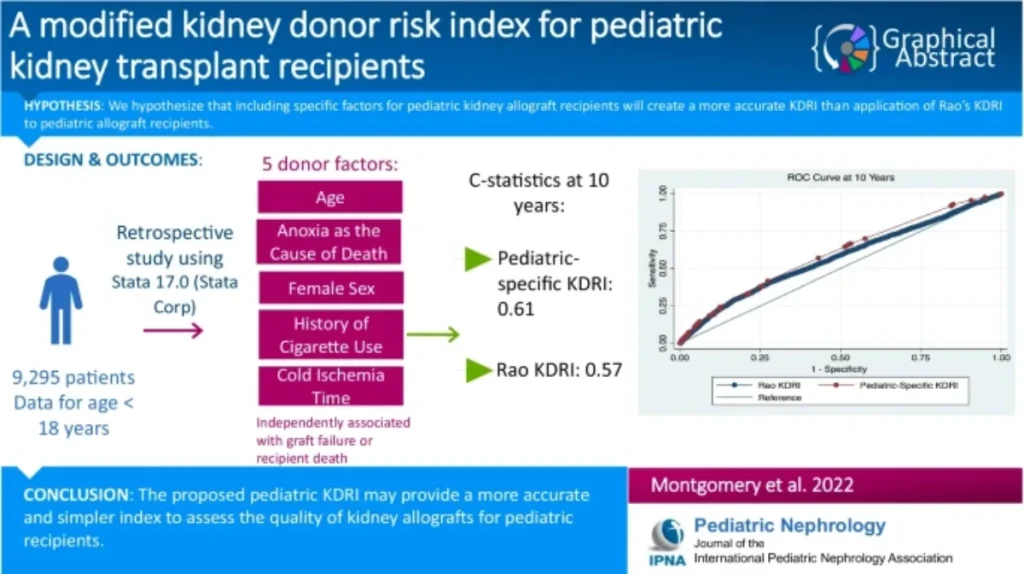
The operational framework governing organ transplantation is undergoing a massive regulatory shift to ensure equitable patient care. Regulatory authorities have officially introduced a modified risk-adjustment methodology proposed for the kidney graft survival quality domain to optimize hospital evaluations. This sophisticated statistical update directly addresses growing concerns regarding how performance metrics inadvertently influence clinical decisions at major transplant centers.
By modernizing the mathematical calculations within the kidney graft survival quality domain, policymakers aim to establish a much fairer baseline for participating medical institutions. Under the previous guidelines, centers frequently faced harsh penalties if high-risk transplant procedures resulted in early organ failure. The newly introduced methodology actively recalibrates these expectations, factoring in complex donor and recipient variables to protect innovative hospitals from unfair systemic grading.
Mitigating Risk-Averse Practices in Transplant Centers
The primary catalyst for updating the kidney graft survival quality domain was the unintended rise of highly cautious, risk-averse medical practices. Without proper risk adjustment, surgical teams naturally felt immense pressure to decline complex organs to safeguard their public performance ratings. This defensive approach unfortunately meant that marginally sub-optimal organs were frequently discarded instead of being utilized for desperate patients.
Integrating a modified statistical model into the kidney graft survival quality domain fundamentally changes these underlying clinical incentives. Surgeons can now confidently accept more complex donor organs, knowing the evaluation system adjusts for pre-existing physiological complications. This crucial structural buffer shifts the focus back to maximizing patient longevity rather than maintaining flawless, unadjusted institutional survival metrics.
Technical Integration of the SRTR Framework
From a technical perspective, the proposed update to the kidney graft survival quality domain heavily adapts the verified Scientific Registry of Transplant Recipients (SRTR) framework. This alignment ensures that the composite graft survival calculations are thoroughly grounded in extensive, decades-old empirical data. The model specifically evaluates key variables such as donor age, recipient body mass index, and historical diabetic status.
Furthermore, adjusting the kidney graft survival quality domain involves implementing advanced Bayesian statistical methods to stabilize overall performance scores. This mathematical integration prevents low-volume transplant hospitals from experiencing massive, inaccurate score fluctuations based on a single isolated clinical outcome. Consequently, the resulting evaluation ecosystem delivers a highly predictable and realistic reflection of actual care quality.
Exclusion of Complex Multi-Organ Transplants
Another major structural refinement introduced alongside the kidney graft survival quality domain modifications is the explicit exclusion of most multi-organ procedures. Procedures involving simultaneous heart-kidney or liver-kidney transplantations present highly volatile clinical pathways that skew standard data. Recognizing these distinct challenges, policymakers have separated these cases to preserve the integrity of the core dataset.
Isolating standard cases within the kidney graft survival quality domain metrics allows for a cleaner, more accurate assessment of standard kidney graft functionality. Complex multi-organ surgeries will no longer disproportionately penalize localized programs that frequently take on highly challenging anatomical cases. This crucial separation effectively guarantees that specialized centers are evaluated strictly on comparable, reproducible medical scenarios.
Expanding Performance Scoring Tiers
To further minimize sudden, punitive rating drops, the points allocation framework tied to the kidney graft survival quality domain has been expanded. The system is transitioning from a rigid five-tier structure to a highly nuanced eight-tier performance matrix. This expanded distribution prevents minor statistical variances from triggering massive financial or regulatory penalties for participating clinics.
Grading the kidney graft survival quality domain across expanded tiers allows for a much smoother, more precise differentiation of hospital success. It rewards incremental institutional improvements while ensuring that underperforming centers receive targeted operational support rather than immediate, destructive financial sanctions. This balanced approach creates a highly cooperative atmosphere focused entirely on sustainable, long-term healthcare quality.
Long-Term Impacts on National Organ Utilization
The ultimate societal objective of updating the kidney graft survival quality domain is to dramatically boost national organ utilization rates. Historically, almost a third of recovered kidneys were discarded due to systemic logistical bottlenecks and intense administrative fear. This updated methodology directly removes those psychological barriers, paving the clear way for thousands of additional successful surgeries.
As the refined kidney graft survival quality domain parameters take full effect, the tech-driven model will heavily reduce waitlist mortality rates. Patients suffering from end-stage renal disease will experience vastly expedited access to functioning organs, significantly minimizing their reliance on grueling dialysis treatments. Ultimately, this regulatory evolution perfectly aligns hospital performance tracking with the core mission of saving human lives.
Conclusion
The modified risk-adjustment methodology proposed for the kidney graft survival quality domain represents a pivotal milestone in modern healthcare policy. By integrating adapted SRTR frameworks and expanding scoring tiers, regulators are actively dismantling the toxic culture of clinical risk aversion. This systemic update ensures that transplant centers can aggressively pursue complex, life-saving surgeries without fearing unfair administrative penalties, securing a highly compassionate future for organ transplantation.
Frequently Asked Questions
What is the main goal of the proposed kidney graft survival quality domain update?
The primary objective is to implement a fair risk-adjustment methodology that prevents hospitals from becoming risk-averse when accepting complex organs.
Which specific statistical model is this new methodology based on?
The proposed updates are heavily adapted from the Scientific Registry of Transplant Recipients (SRTR) adult first-year post-transplant risk models.
Why are multi-organ transplants excluded from this specific quality metric?
Multi-organ procedures are excluded because their highly complex clinical outcomes can unfairly skew the data for standard kidney graft evaluations.
How does the expanded eight-tier scoring system benefit participating hospitals?
The expanded tiers provide a more nuanced evaluation matrix, effectively preventing minor statistical variances from triggering severe, sudden regulatory penalties.
Will this methodology change help reduce the number of discarded donor organs?
Yes, by removing the fear of unadjusted performance downgrades, surgeons will be significantly more willing to utilize complex donor kidneys successfully.