
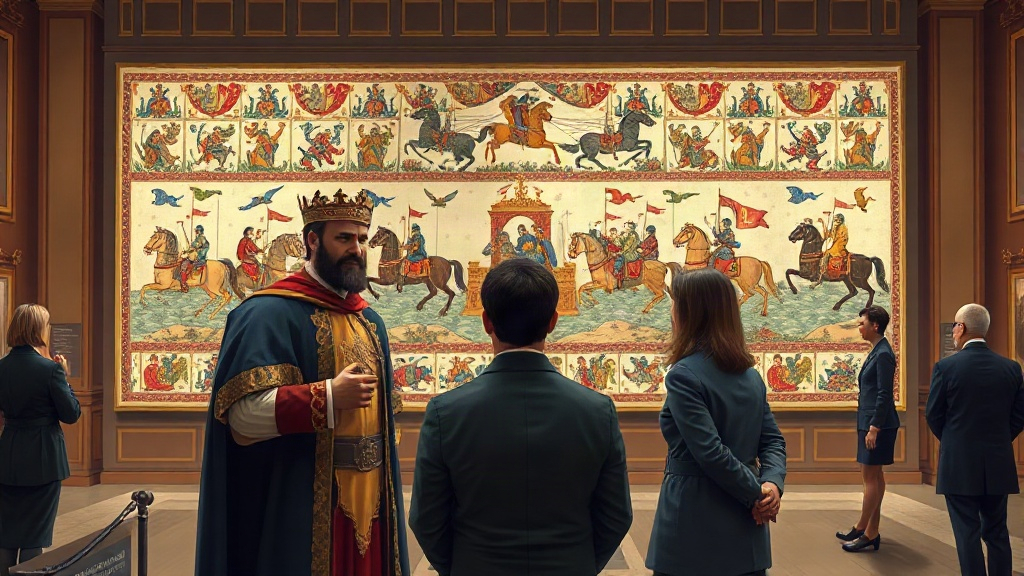
In a world often divided by shifting alliances and diplomatic friction, a nearly thousand-year-old embroidered cloth has emerged as an unexpected ambassador of friendship. King Charles III, during a visit to the British Museum in London, declared that the loan of the Bayeux Tapestry from France represents the best possible symbol of the entente amicale between the two nations. His remarks came as the iconic masterpiece, which vividly recounts the Norman Conquest of England, takes centre stage in a rare display outside French soil.
The King's words carried a weight that transcended mere ceremonial pleasantries. Standing before the 70-metre-long embroidery, he told French President Emmanuel Macron that the tapestry, despite depicting a bloody invasion, now serves as a precious symbol of trust at a time when such trust is in short supply among nations. This sentiment, delivered in the presence of both British and French dignitaries, underscored a broader message: that historical artefacts can bridge modern divides.
The Historical Significance of the Bayeux Tapestry
For those unfamiliar with its origins, the Bayeux Tapestry is not a tapestry in the traditional woven sense but rather an embroidered cloth stretching over 70 metres in length. Created in the 11th century, it graphically narrates the events leading up to the Norman invasion of England in 1066, culminating in the Battle of Hastings and the death of King Harold. The work is a treasure of medieval art, combining vivid imagery with Latin inscriptions to tell a story of ambition, betrayal, and conquest.
Its loan to the United Kingdom is not merely a cultural exchange but a diplomatic gesture of profound significance. The tapestry has rarely left France, and its presence in London marks a new chapter in cross-Channel relations. Historians note that the embroidery itself is a testament to the intertwined histories of England and France, a shared past that continues to shape both nations' identities.
Why the Loan Matters Now
The timing of the loan is no coincidence. In recent years, the relationship between the UK and France has navigated the choppy waters of Brexit, fishing rights disputes, and differing approaches to migration. Yet, as King Charles pointed out, cultural diplomacy can often succeed where political negotiations falter. The tapestry's arrival serves as a reminder that the two countries have weathered far greater storms together.
For the British public, the exhibition offers a rare opportunity to see a piece of their own history through a French lens. The tapestry's depiction of the Norman Conquest is, after all, a story of invasion and occupation, but its display in London reframes that narrative as one of shared heritage rather than lingering resentment. It is a masterclass in how nations can reinterpret historical artefacts to foster contemporary goodwill.
King Charles's Diplomatic Role
King Charles has often spoken of the importance of environmental stewardship and interfaith dialogue, but his remarks at the British Museum highlight another facet of his diplomatic approach: cultural bridge-building. By invoking the concept of entente amicale, he deliberately echoed the historic Entente Cordiale agreements of 1904, which laid the groundwork for the Anglo-French alliance that proved vital in two world wars.
His choice of words was both nostalgic and forward-looking. The phrase "entente amicale" suggests not just a formal understanding but a genuine warmth between peoples. In an era of transactional diplomacy, such language stands out. The King's emphasis on trust, or rather its scarcity, hinted at a deeper concern about the current global order, where alliances are tested and multilateralism is under strain.
Reactions from France and the UK
French officials have welcomed the loan as a gesture of goodwill. President Macron, who has sometimes had a prickly relationship with British leaders, appeared receptive to the King's framing. The tapestry's journey across the Channel is seen in Paris as a sign that cultural ties remain strong despite political differences.
In the UK, the exhibition has generated considerable public interest. Tickets for the British Museum display have been in high demand, with many eager to see the embroidery that has captured imaginations for centuries. Schools have organised trips, and historians have praised the museum's efforts to provide context through interactive exhibits and expert commentary.
The Broader Implications for UK-France Relations
Beyond the immediate spectacle, the loan of the Bayeux Tapestry carries significant implications for bilateral relations. It signals a willingness on both sides to invest in soft power and cultural exchange as a means of strengthening ties. In a post-Brexit landscape, such gestures are more important than ever, as the UK seeks to redefine its role on the European stage.
For France, the loan is a demonstration of confidence in the UK as a reliable partner for cultural cooperation. It also serves as a reminder of the deep historical connections that bind the two nations, from the Norman conquest to the shared sacrifices of the world wars. The tapestry, in its own way, tells a story of conflict that ultimately led to fusion, a narrative that resonates with the complexities of modern Europe.
What Visitors Can Expect
The exhibition at the British Museum is designed to be immersive and educational. Visitors will have the chance to view the tapestry up close, with detailed explanations of its scenes and symbolism. Interactive displays will allow audiences to explore the historical context, from the political machinations of 11th-century Europe to the artistry of the embroidery itself.
Curators have also arranged for a series of lectures and workshops, featuring experts from both the UK and France. These events aim to foster a deeper understanding of the tapestry's significance, not just as a historical artefact but as a living symbol of cultural exchange. The museum has also produced a companion publication, offering insights into the tapestry's creation, preservation, and enduring legacy.
Challenges and Controversies
No major cultural event is without its critics. Some have questioned the cost of transporting and insuring such a fragile artefact, while others have raised concerns about the political implications of celebrating a conquest that led to the subjugation of the Anglo-Saxon people. However, the prevailing view among historians is that the tapestry is a nuanced document that reflects the complexities of its time, and its display in London is an opportunity for reflection rather than triumphalism.
There have also been logistical challenges. The tapestry's sheer size and delicate condition require specialised handling and climate-controlled display cases. The British Museum has worked closely with French conservators to ensure that the embroidery is presented in a way that preserves it for future generations while making it accessible to the public.
Looking Ahead: The Future of Cultural Diplomacy
The Bayeux Tapestry loan is part of a broader trend of using cultural heritage to foster international understanding. Museums and galleries around the world are increasingly recognising their role as platforms for diplomacy, hosting exhibitions that transcend political boundaries. In this context, the tapestry's journey is not an isolated event but a model for future collaborations.
King Charles's remarks at the British Museum may well be remembered as a defining moment in his reign, a time when he used the power of history to speak to the present. As the tapestry continues to draw crowds, it serves as a tangible reminder that even the most ancient artefacts can inspire new conversations about friendship, trust, and the ties that bind nations together.
Frequently Asked Questions
Why is the Bayeux Tapestry being loaned to the UK?
The loan is intended to strengthen cultural ties between France and the UK, serving as a symbol of friendship and shared history. It follows a request from the British government and has been agreed upon by both nations as a gesture of goodwill, particularly in the post-Brexit era.
How long will the Bayeux Tapestry be on display in London?
While exact dates may vary, the exhibition at the British Museum is expected to run for several months. Visitors are advised to check the museum's official website for the most up-to-date information on opening times and ticket availability.
What is the historical significance of the Bayeux Tapestry?
The tapestry is a unique 11th-century embroidered cloth that depicts the events leading to the Norman Conquest of England. It is invaluable both as a work of art and as a historical document, offering insights into medieval warfare, politics, and daily life.
Has the Bayeux Tapestry ever been displayed in the UK before?
This is the first time the tapestry has been loaned to the UK in modern history. Its display in London marks a significant cultural milestone and reflects the strong bilateral relationship between the two countries.
What did King Charles say about the tapestry?
King Charles described the tapestry as the best possible symbol of the entente amicale between France and the UK, calling it a precious symbol of trust in a time when trust between nations is scarce. His remarks highlighted the importance of cultural diplomacy in maintaining strong international relationships.