
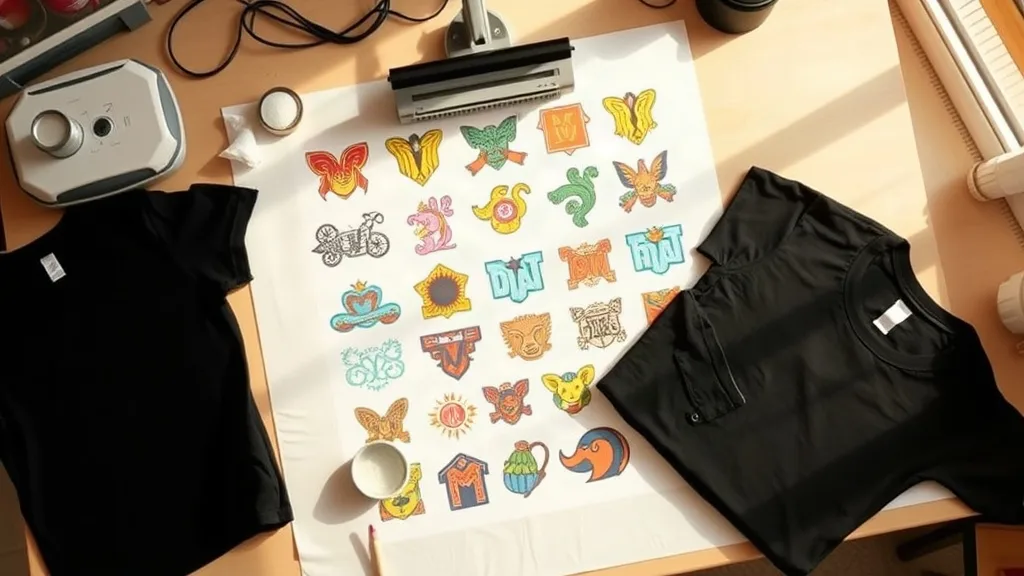
A few years ago, if you wanted to print twelve different shirt designs for a weekend market, you either paid for twelve separate setups or waited a week for a screen printer to batch them together. Today, a small shop with one desktop printer and a heat press can lay out all twelve designs on a single sheet of film, print them in one pass, and have the whole order ready by Friday afternoon. That shift comes down to one practical tool: the DTF Gangsheet, a layout method that has quietly reshaped how independent apparel businesses handle small and mixed orders.
This piece looks at what gangsheets actually are, where they save real money, and where they can trip up a beginner. If you are running a print-on-demand side business, a team uniform order, or a craft stall, the details below are the ones that matter after the first few jobs.
What a DTF Gangsheet Actually Is
Direct-to-film printing works by printing a design in reverse onto a special film, dusting it with adhesive powder, curing the powder, and then pressing the finished transfer onto fabric with a heat press. A DTF Gangsheet is simply a single large film file that contains many individual designs arranged together, like a contact sheet of transfers. Instead of printing each design on its own small sheet, you gang them up.
The concept borrows from gang printing in offset lithography, where multiple jobs share one press run to spread setup costs. In DTF, the logic is similar but the savings show up in film, powder, and machine time rather than plates and ink.
Anatomy of a Well-Built Sheet
A gangsheet is not just designs dropped onto a canvas. A production-ready sheet usually includes:
- A defined film width, commonly 13, 22, or 24 inches depending on the printer
- Designs nested closely but with enough bleed to avoid color halos
- Registration or cut marks if the shop trims transfers by hand or with a cutter
- A consistent white ink layer under every design, since DTF relies on white for opacity on dark garments
- Spacing that accounts for powder scatter, which can drift a millimeter or two beyond the printed edge
Get those details right and the sheet presses cleanly. Skip them and you will spend an evening trimming fuzzy edges and reprinting designs that bled into each other.
Where the Cost Savings Really Come From
Newcomers often assume the savings come from ink. Ink is actually a minor cost. The real money sits in three places.
1. Film Utilization
Film is sold by the meter or by the sheet, and unused film at the end of a roll is wasted money. A well-nested gangsheet can push film utilization above 85 percent, while printing designs one at a time often leaves 30 to 40 percent of each sheet blank. Over a hundred jobs, that gap adds up to real inventory sitting in a landfill.
2. Powder and Cure Time
Adhesive powder is applied across the printed area, and every curing pass through the oven costs time and electricity. Printing five designs on one sheet means one powder application and one cure cycle instead of five. A shop running twenty small orders a week can cut its cure cycles by roughly 60 to 70 percent by ganging jobs together.
3. Labor
Trimming, labeling, and bagging transfers is hand work. When transfers come off one sheet, they can be trimmed in a single sitting with a rotary cutter or a vinyl cutter, then sorted into order bags. The time savings here are the ones shop owners notice first, because it converts a scattered task into a focused one.
When a Gangsheet Is the Wrong Choice
Gangsheets are not universally better. They make sense for mixed small orders, sample packs, and multi-design product lines. They are a poor fit in a few situations:
- Single large orders. If a customer wants 200 identical shirts, a dedicated print run or a screen print setup will usually beat ganging for cost per unit.
- Very tight deadlines on one design. Waiting to fill a sheet before printing adds lead time. If a customer needs one transfer today, print it today.
- Highly detailed fine art. Powder scatter and film texture can soften extremely fine halftones. Test before committing a large order.
A useful rule of thumb: if your average order contains three or fewer units and more than one design, gang it. If it contains a single design in volume, run it alone.
Building a Sheet That Presses Cleanly
The difference between a professional gangsheet and a frustrating one usually comes down to preparation. These steps are worth building into a checklist.
Set a Consistent Bleed
Give every design at least 2 to 3 mm of bleed around the edges. Without it, the white underbase can peek out as a thin halo after pressing, especially on stretchy fabrics.
Group by Fabric and Color
If you know which designs are going on black cotton and which on white polyester, group them. Polyester needs lower pressing temperatures to avoid dye migration, and mixing fabric types on one sheet means you cannot batch the press settings.
Leave Room for Powder
Adhesive powder does not stay perfectly inside the printed area. A 4 to 6 mm gap between designs is a safe working margin on most desktop DTF printers. Tighter gaps save film but cost you trimming time.
Label Before You Print
Add small order codes next to each design in the file. When transfers come off the sheet, matching them to the right customer becomes a glance instead of a guessing game.
What to Look for If You Outsource Gangsheets
Not every shop wants to run its own DTF printer. Many independent sellers order gangsheets from a production partner and focus on design, marketing, and fulfillment. If that is your model, a few details separate reliable suppliers from frustrating ones.
- Ask what film width they run, since it affects how tightly they can nest your designs
- Confirm whether they charge by the sheet, by the meter, or by the design, as pricing models vary widely
- Request a sample press on the fabric you actually use, not just a photo of the transfer
- Check turnaround times for reprints, because a misprint on a deadline order is the real test of a supplier
Most experienced buyers order a small test sheet first, press it on their own blanks, wash it twice, and then commit to a larger run. That single test saves more headaches than any spec sheet.
Frequently Asked Questions
How many designs can fit on one DTF gangsheet?
It depends entirely on design size and film width. A 22-inch wide sheet that is one meter long can hold dozens of small chest logos or as few as two or three large back prints. Most shops plan layouts in design software first to check utilization before sending the file to print.
Do gangsheets work on dark and light fabrics equally well?
Yes, because DTF uses a white ink underbase that sits beneath the color layer. That white layer is what makes the same transfer work on black cotton, heather grey, and white polyester. The pressing temperature may need adjustment for polyester to prevent dye migration, but the transfer itself is the same.
Can I reuse a gangsheet file for a later order?
You can reuse the layout, but you should rebuild it for each new order. Reusing a saved sheet means printing designs you do not need, which wastes film and powder. Keep a library of individual design files and a template layout instead, then drop in only the designs for the current batch.
How long do DTF transfers keep before pressing?
Stored flat, away from heat, moisture, and direct sunlight, most transfers remain usable for several months. Humidity is the main enemy, since it can affect the powder layer. Sealed bags with a desiccant pack are a practical storage solution for shops holding inventory between orders.
Is a gangsheet cheaper than ordering individual transfers?
Usually, yes, for mixed small orders. The savings come from shared film, one powder application, and one cure cycle. For a single design in high volume, a dedicated run is typically more economical, so the right answer depends on your order mix rather than on the format itself.
The Takeaway
Gangsheets reward planning. The shops that get the most from them are not the ones with the biggest printers, but the ones who batch orders deliberately, nest designs thoughtfully, and treat film as a resource worth measuring. Start with one test sheet, press it on the blanks you actually sell, and let the results guide the next batch. That approach turns a simple layout habit into a genuine production advantage.