
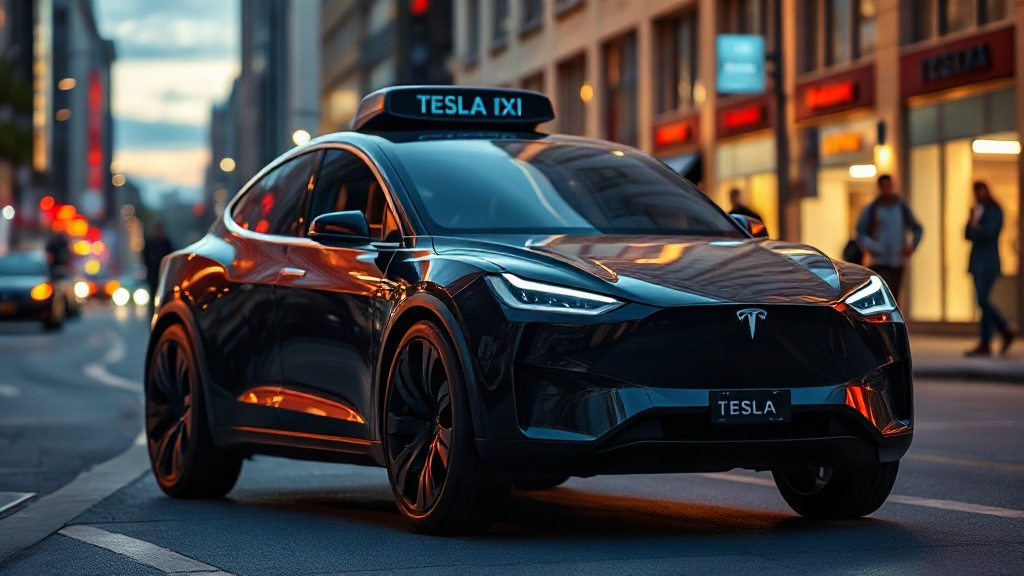
When Tesla pulls the cover off its long-awaited robotaxi this Thursday, the world will see a vehicle with no steering wheel, no pedals, and no human driver required. It is a bold statement about the future of transportation. But as the saying goes, the devil is in the details, and the real test for the Cybercab will not be in the reveal but in everything that comes after.
The electric automaker has spent years teasing a fully autonomous ride-hailing service. Now, with the Cybercab's official debut, the company is about to enter a minefield of regulatory hurdles, infrastructure demands, and public skepticism. Building the car is indeed the easy part. Making it work on real streets, with real passengers, and under real laws is an entirely different challenge.
A Glimpse of the Future, or a Prototype of Problems?
The Cybercab is expected to be a compact, futuristic two-seater designed specifically for autonomous ride-hailing. Without traditional controls, it relies entirely on Tesla's Full Self-Driving (FSD) software and a suite of cameras and sensors. The design is radical, but it is not the first time a company has promised a driverless future. Waymo, Cruise, and others have been testing robotaxis for years, albeit with varying degrees of success and far more conservative vehicle designs.
Tesla's approach is distinct in one critical way: it uses cameras only, no lidar or radar. This has been a point of contention among safety experts and engineers. While Tesla argues that cameras and neural networks are sufficient, critics point to edge cases like heavy rain, fog, or unusual road debris where additional sensors could provide a safety net. The Cybercab's debut will not settle this debate, but it will raise the stakes.
Moreover, the absence of a steering wheel means there is no fallback for a human driver. In an emergency, the vehicle must handle everything on its own. That is a monumental leap from the current state of driver-assist systems, which still require human oversight. The Cybercab, if it ever reaches public roads, will be fully Level 5 autonomous—a level that no company has yet achieved in a commercial product.
The Regulatory Gauntlet
Even before the first Cybercab can pick up a passenger, Tesla must navigate a patchwork of state and federal regulations. In the United States, autonomous vehicles are governed primarily at the state level, and the rules vary wildly. Some states, like Arizona and Texas, have been relatively welcoming to robotaxi testing. Others, like California, have imposed strict permitting requirements and data reporting obligations. Tesla has not always been on friendly terms with regulators, and its aggressive timelines have sometimes clashed with the slow pace of government approval.
Beyond state rules, the National Highway Traffic Safety Administration (NHTSA) has the authority to set federal motor vehicle safety standards. A vehicle without a steering wheel or brake pedal may need an exemption from these standards, which can be a lengthy and uncertain process. Tesla could argue that the Cybercab is not a traditional car and therefore not subject to the same rules, but that argument may not hold up in court.
There is also the question of insurance and liability. In a driverless car, who is responsible when something goes wrong? The owner? The manufacturer? The software developer? These are not trivial questions, and they have not been fully resolved even for the limited robotaxi services already operating. For the Cybercab to scale, Tesla will need to address them head-on, likely through partnerships with insurers or by self-insuring its fleet.
Infrastructure and Operational Realities
Building the Cybercab is one thing. Operating a fleet of them is another. Tesla has hinted at a ride-hailing app that would allow users to summon a Cybercab much like an Uber or Lyft. But running such a service requires more than just cars. It requires charging infrastructure, maintenance facilities, cleaning crews, and customer support. Tesla's existing Supercharger network is a strong foundation, but it was designed for privately owned vehicles that charge at home or on road trips. A robotaxi fleet needs high-utilization, rapid-turnaround charging, which may require dedicated stations and new hardware.
There is also the challenge of mapping and geofencing. While Tesla's FSD is designed to work anywhere, early deployments of the Cybercab are likely to be limited to specific cities or even specific neighborhoods where the company has collected enough data and where local authorities have granted permission. This is a far cry from the vision of a global robotaxi network, but it is a realistic starting point.
And then there is the human element. Even in a fully autonomous vehicle, passengers may need assistance. What happens if a rider leaves a bag in the car? What if a passenger becomes ill or disruptive? Without a driver, these situations must be handled remotely or through automated systems. Companies like Waymo have built extensive remote operations teams to monitor and assist vehicles. Tesla will need to do the same, and that is a significant operational undertaking.
Public Trust and the Fear Factor
Perhaps the biggest hurdle is not technical or regulatory but psychological. Surveys consistently show that a large portion of the public is uncomfortable with the idea of riding in a car with no human driver. High-profile accidents involving autonomous vehicles, even when they are not the vehicle's fault, have eroded trust. Tesla's own Autopilot and FSD systems have been involved in several fatal crashes, and the company's handling of those incidents has drawn criticism from safety advocates and government agencies.
The Cybercab, with its lack of any manual controls, is the ultimate test of that trust. It is one thing to use a driver-assist feature on a highway; it is another to sit in the back seat of a small pod with no way to take over. Tesla will need to prove not only that the technology is safe but that it is safer than a human driver. That is a high bar, and it will require transparent data, independent audits, and a track record of millions of incident-free miles.
There is also the question of accessibility. A two-seat vehicle without a driver may not accommodate wheelchairs, service animals, or passengers who need assistance. Unless Tesla designs the Cybercab with accessibility in mind from the start, it could face backlash from disability rights advocates and potentially legal challenges under the Americans with Disabilities Act.
What Comes Next
Thursday's debut will be a spectacle, no doubt. Tesla knows how to generate excitement, and the Cybercab is likely to be a showstopper. But the real story will unfold over the following months and years. Will Tesla secure the necessary regulatory approvals? Will it launch a pilot program in a friendly city? Will it be transparent about safety data? These are the questions that will determine whether the Cybercab becomes a revolutionary product or a cautionary tale.
For now, the Cybercab is almost here. But the hard part is just beginning.
Frequently Asked Questions
When will the Tesla Cybercab be available to the public?
Tesla has not announced a specific date for public availability. The vehicle is being unveiled this week, but production and deployment timelines are still unclear. Regulatory approvals and operational readiness will play a major role in when and where the Cybercab first appears.
Is the Cybercab truly fully autonomous?
The Cybercab is designed to be fully autonomous with no steering wheel or pedals, meaning it would rely entirely on Tesla's Full Self-Driving software. However, achieving true Level 5 autonomy on public roads is a significant challenge, and the vehicle will likely be limited to specific areas initially.
How does the Cybercab differ from Waymo's robotaxis?
Waymo's robotaxis use a combination of lidar, radar, and cameras, while Tesla relies on cameras only. Waymo has also been operating a commercial robotaxi service in select cities for years, whereas Tesla is just unveiling its vehicle. Tesla's approach is more scalable in theory but has not yet been proven in real-world operations.
Will the Cybercab be safe without a steering wheel?
Safety is the central concern. Tesla argues that its camera-based system is sufficient and that removing human controls eliminates human error. However, safety experts and regulators will require extensive testing and data before such a vehicle can be widely deployed. The absence of a fallback driver makes this a particularly high-stakes proposition.
What challenges could delay the Cybercab's launch?
The biggest challenges include regulatory approval at the state and federal level, insurance and liability issues, building out charging and maintenance infrastructure for a fleet, and earning public trust. Any of these could push back the timeline significantly.