
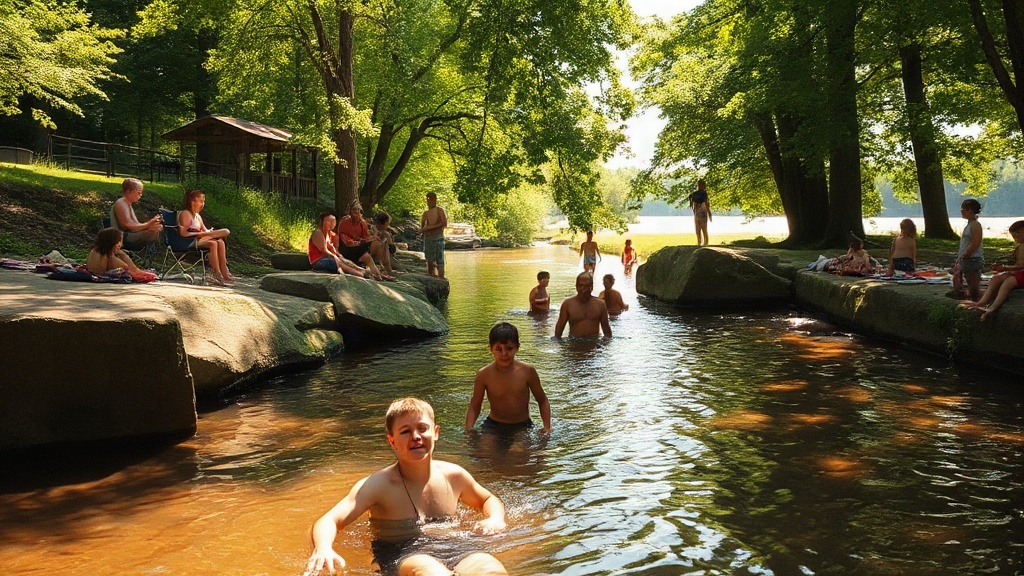
On a sweltering summer afternoon in Poughkeepsie, New York, the air hangs thick with humidity. The Hudson River glints in the distance, but for those in the know, the real refuge lies a short walk from the riverbank: a modest swimming creek that has served as a communal oasis for generations. For more than a decade, photographer Caleb Stein has been returning to this spot each summer, camera in hand, to document the people who gather there. The result is Down by the Hudson, a book and exhibition that offer an intimate, joyful portrait of a place where time seems to slow down and the simple act of swimming becomes a shared ritual.
Stein's project, which began in 2013 and continues through 2025, is not a documentary in the traditional sense. It is a visual ode, a love letter to a creek and the diverse community it attracts. Over twelve summers, he has photographed children cannonballing into the water, teenagers lounging on rocks, families picnicking under the shade of trees, and elders who have been coming to this spot since they were young. The images, published by Palo Press with an accompanying exhibition opening in New York on September 10, capture moments of pure, unguarded joy.
The Allure of the Swimming Creek
Why does a swimming creek hold such a powerful place in the imagination? Unlike a swimming pool with its chlorine and lane lines, a creek is a living ecosystem. The water is cool but not cold, clear enough to see the pebbles on the bottom, and constantly moving, creating a gentle current that invites you to float. In Poughkeepsie, the creek is fed by natural springs, and its waters eventually make their way to the Hudson. It is a liminal space, neither fully wild nor fully domesticated, where people can feel a connection to nature without leaving the city behind.
Stein's photographs capture this sense of place with remarkable sensitivity. He works with a medium-format film camera, which forces him to slow down and observe. The resulting images have a timeless quality, as if they could have been taken in any decade. A young girl in a bright swimsuit stands at the edge of the water, her toes curling over a flat rock. Two boys wrestle playfully in the shallows, their laughter almost audible. An older man sits on a folding chair, watching the scene with a knowing smile. These are not posed portraits but candid moments, glimpses of a community at ease.
A Decade of Summers: Building Trust and Seeing Change
One of the most striking aspects of Stein's project is its longevity. Returning to the same place year after year, he has become a familiar presence, a part of the summer landscape. This trust is evident in the photographs, which have an unusual intimacy. People are not performing for the camera; they are simply being themselves. Stein has spoken about the friendships he has formed with many of the regulars at the creek, and these relationships have deepened his understanding of the place.
Over the course of a decade, Stein has also witnessed changes at the creek. The water level fluctuates from year to year, depending on rainfall. Trees have fallen, new paths have been worn into the earth, and the composition of the crowd has shifted as new families discover the spot. Yet the essential character of the place remains remarkably constant. It is still a place where people come to escape the heat, to connect with friends and neighbors, and to experience the simple pleasure of being in the water.
The title Down by the Hudson is a nod to the creek's location and its relationship to the great river. The Hudson River is an iconic American waterway, but it is also a working river, with industrial sites and heavy boat traffic. The swimming creek offers a different kind of Hudson experience, one that is intimate and personal. It is a reminder that even in a densely populated area, pockets of natural beauty and communal life persist.
The Photographs: A Visual Language of Joy
Stein's visual language is characterized by warm, natural light and a keen eye for gesture. He often photographs from a low angle, which gives his subjects a monumental quality, even when they are engaged in mundane activities. The colors are rich but not overly saturated, reflecting the true tones of summer. Green leaves, blue water, and the varied hues of swimsuits and towels create a vibrant palette.
Many of the photographs focus on the physicality of swimming and play. There are images of bodies mid-air, arms outstretched, as swimmers leap from rocks. There are underwater shots, where the world is distorted and dreamlike. There are quiet moments of rest, with people floating on their backs, eyes closed, faces turned toward the sun. These images celebrate the body in motion and at rest, and they convey a sense of freedom that is increasingly rare in our screen-dominated lives.
The exhibition, opening at Palo Gallery in New York on September 10, will feature a selection of these photographs. For those unable to attend, the book offers a comprehensive look at the project, with essays that provide context and insight into Stein's process. The book is designed to be a visual journey through the summers, with images sequenced to evoke the rhythm of a day at the creek, from the first morning swimmers to the golden light of late afternoon.
A Universal Story of Community and Belonging
While the photographs are deeply rooted in a specific place, the themes they explore are universal. The swimming creek is a democratic space, open to all who find it. It is a place where social barriers dissolve in the water. Stein's photographs show people of different ages, races, and backgrounds sharing the same experience, bound by a common love of the creek. In a time of increasing division, this vision of community is both heartening and necessary.
The project also touches on issues of access to nature and public space. The creek is not an officially designated swimming area; it is a place that has been used by locals for decades, often without formal recognition. This raises questions about who has the right to enjoy natural resources and how these spaces can be preserved for future generations. Stein's photographs serve as a powerful argument for the importance of such informal gathering places.
For photographers and artists, Stein's work is a masterclass in long-term, immersive storytelling. It demonstrates the value of patience, of returning to a subject repeatedly until you truly understand it. It also shows the power of photography to capture fleeting moments of beauty and to elevate the ordinary to the level of art.
Conclusion: A Timeless Ode to Summer
Down by the Hudson is more than just a collection of pretty pictures. It is a meditation on time, community, and the enduring appeal of water. It is a reminder that joy can be found in the simplest of activities, and that the places we love are worth documenting and protecting. Caleb Stein's photographs will resonate with anyone who has ever felt the pull of a cool creek on a hot summer day, and they offer a hopeful vision of what community can look like when we come together in nature.
Frequently Asked Questions
Where exactly is the swimming creek featured in Down by the Hudson?
The creek is located in Poughkeepsie, New York, near the Hudson River. It is a natural swimming spot that has been used by the local community for generations. Stein intentionally keeps the precise location somewhat ambiguous to preserve the creek's intimate character and prevent overcrowding, but it is within the Poughkeepsie area and accessible to those who know where to look.
How long did Caleb Stein work on this photography project?
Stein began photographing the creek in 2013 and continued through 2025, making it a twelve-year project. He returned every summer, building relationships with the regulars and documenting the changing seasons and community. This long-term commitment is what gives the photographs their depth and intimacy.
What kind of camera and film does Caleb Stein use?
Stein uses a medium-format film camera, which produces high-resolution images with a distinctive tonal quality. The use of film requires a slower, more deliberate approach, and it contributes to the timeless, classic feel of the photographs. The exact camera model and film stock are not specified in the source material, but the medium format is evident in the image quality.
Is the book Down by the Hudson available for purchase?
Yes, the book is published by Palo Press and is available through the publisher's website and select bookstores. It accompanies the exhibition opening at Palo Gallery in New York on September 10. The book includes a curated selection of photographs from the twelve-year project, along with essays that provide context and insight.
What makes this swimming creek different from other swimming spots in New York?
Unlike public pools or beaches, this creek is a natural, informal gathering place. It is fed by springs, has a gentle current, and offers a sense of seclusion and connection to nature that is rare in urban and suburban areas. The creek has a strong sense of community, with many families returning for generations, making it a unique cultural and natural treasure in the Hudson Valley.