
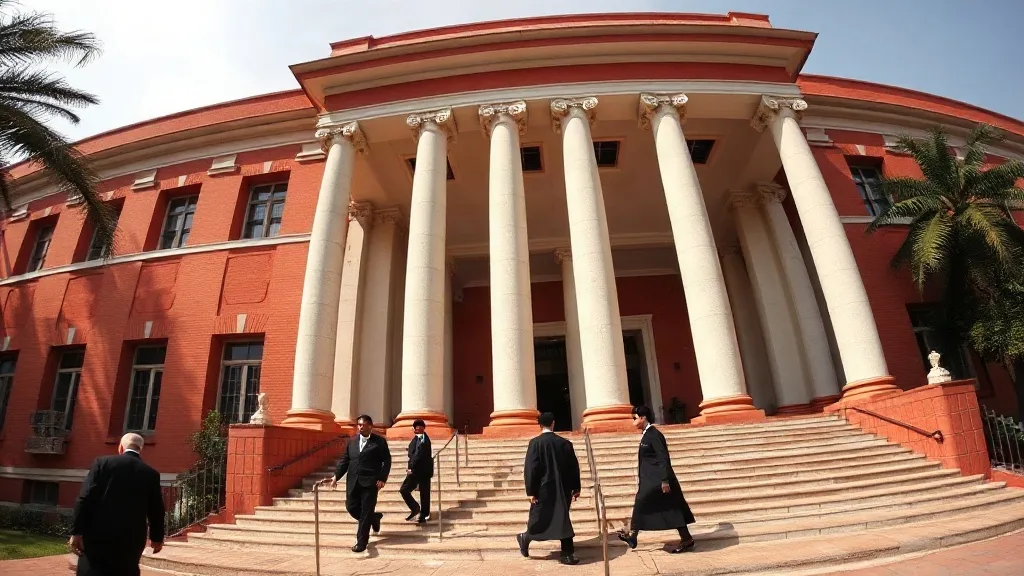
The Madras High Court on Tuesday delivered a judgment that brings a measure of clarity to a political puzzle that has lingered over the Tamil Nadu Assembly for months: the status of six AIADMK legislators who resigned their seats. A division bench of Chief Justice Sushrut Arvind Dharmadhikari and Justice G. Arul Murugan upheld the Assembly Speaker's decision to accept those resignations, but simultaneously directed the Speaker to complete the pending disqualification proceedings against four of the six MLAs within two months. The order, while validating the resignations, keeps alive the question of whether those legislators should face further consequences under the anti-defection law.
The case had its roots in a series of resignations that shook the AIADMK's legislative strength. In 2023, six MLAs submitted their resignations to the Speaker, citing various reasons. The Speaker accepted the resignations, a move that was challenged in the High Court by petitioners who argued that the resignations were not voluntary or that they should have triggered disqualification proceedings first. The court's decision to uphold the Speaker's action settles one aspect of the dispute but leaves the disqualification question open for four of the MLAs.
What the Court Actually Decided
The division bench's ruling has two distinct parts. First, it affirmed that the Speaker acted within his powers by accepting the resignations. Under the Rules of Procedure of the Tamil Nadu Legislative Assembly, the Speaker has the authority to accept a resignation if satisfied that it is voluntary and genuine. The court found no procedural impropriety in the Speaker's decision. Second, the court noted that disqualification proceedings under the Tenth Schedule of the Constitution were still pending against four of the six MLAs. It directed the Speaker to conclude those proceedings within two months. This dual approach means the resignations stand, but the legal cloud over the four MLAs has not fully dispersed.
The distinction matters because resignation and disqualification are different legal routes. A resignation is a voluntary act by a member; disqualification is a penalty imposed for violating the anti-defection law, typically for voluntarily giving up party membership or voting against the party whip. If a member resigns, the question of disqualification may become moot, but only if the resignation is accepted before the disqualification process concludes. In this case, the court seems to be saying that the Speaker must still finish the disqualification inquiry for four MLAs, even though their resignations have been accepted. This could have implications for their future political careers and for the party's strength in the Assembly.
Why the Speaker's Decision Was Challenged
The petitioners who challenged the Speaker's acceptance of the resignations likely argued that the resignations were a tactic to avoid disqualification. If an MLA resigns voluntarily, they can later recontest and return to the House without the stigma of disqualification. If they are disqualified, they are barred from holding any remunerative political post for the duration of the term. The petitioners may have suspected that the resignations were not genuine but were a way to circumvent the anti-defection law. The High Court, however, did not find enough evidence to overturn the Speaker's decision on the resignations themselves. Instead, it kept the disqualification proceedings alive for four MLAs, which suggests the court wants a thorough examination of whether those members' actions amounted to defection.
The legal framework here is the Tenth Schedule, commonly known as the anti-defection law. It disqualifies a member of a House if they voluntarily give up membership of their political party or if they vote or abstain from voting contrary to the party's direction. The Speaker is the authority who decides on disqualification petitions. Courts generally refrain from interfering with the Speaker's decision unless there is a violation of natural justice or a perverse finding. In this case, the High Court has not quashed the Speaker's acceptance of resignations but has reminded him of his duty to decide the disqualification petitions within a time frame.
The Political Fallout
For the AIADMK, the judgment is a mixed bag. On one hand, the resignations being upheld means the party has lost six MLAs from its legislative strength. On the other hand, if the four MLAs are eventually disqualified, it could prevent them from contesting elections or holding party positions for a period. The AIADMK has been grappling with internal dissent and the aftermath of its electoral defeats. The resignation of six MLAs is a significant blow, but the disqualification of four could be even more damaging if it signals that the party's internal discipline is fracturing.
For the ruling DMK government, the reduction in AIADMK's strength may not change the balance of power in the Assembly, given that the DMK has a comfortable majority. However, every seat matters in the long run, and by-elections for the vacant seats could become a referendum on the government's performance. The court's direction to conclude disqualification proceedings within two months adds a sense of urgency. It also puts the Speaker in a delicate position: he must balance the legal requirements of the anti-defection law with the political sensitivities of the moment.
What Happens Next?
The Speaker now has two months to complete the disqualification proceedings against the four MLAs. This means he must issue notices, hear the parties, and pass a reasoned order. If he fails to do so, the High Court could be approached again for contempt or for further directions. The MLAs concerned will have the opportunity to present their defense. They might argue that their resignations were voluntary and therefore the disqualification question is academic. But the court's order suggests that the disqualification proceedings must be concluded regardless, possibly to determine whether they are entitled to any benefits or to contest future elections without disqualification.
Legal experts note that the interplay between resignation and disqualification is not always straightforward. If a member resigns and the resignation is accepted, the membership ends. But if a disqualification petition was already pending, the Speaker may still need to decide it to determine the date from which disqualification, if any, applies. The court's direction ensures that the Speaker does not use the acceptance of resignations as an excuse to avoid deciding the disqualification petitions. This is consistent with the Supreme Court's earlier rulings that Speakers should decide disqualification petitions within a reasonable time, typically three months.
Implications for Anti-Defection Law
This case is a reminder that the anti-defection law is a powerful tool but also one that requires careful application. The Tenth Schedule was introduced to curb the culture of defection, but it has also been criticized for stifling dissent within parties. When MLAs resign, it is often seen as a way to escape the consequences of defection. The Madras High Court's decision to keep the disqualification proceedings alive for four MLAs sends a signal that resignation does not automatically wipe the slate clean. It reinforces the idea that the Speaker must act as a neutral arbiter and not as a partisan figure.
For political parties, the lesson is that internal dissent must be managed before it leads to resignations and disqualifications. The AIADMK's experience shows how quickly a political crisis can escalate into a legal battle. For voters, the case highlights the importance of holding elected representatives accountable. When MLAs resign or are disqualified, by-elections are held, giving voters a chance to choose new representatives. The outcome of those by-elections will be closely watched, as they could indicate the public mood ahead of the next general elections.
Frequently Asked Questions
What is the difference between resignation and disqualification for an MLA?
Resignation is a voluntary act where an MLA gives up their seat, while disqualification is a penalty imposed under the anti-defection law for actions like voluntarily giving up party membership or voting against the party whip. Resignation ends membership immediately upon acceptance, whereas disqualification can bar a person from holding certain positions for a specified period.
Why did the Madras High Court order disqualification proceedings to be completed within two months?
The court likely wanted to ensure that the Speaker does not delay deciding the pending disqualification petitions. Under Supreme Court guidelines, such petitions should be resolved within a reasonable time, typically three months. The two-month deadline provides a clear timeline and prevents the issue from lingering indefinitely.
Can the four MLAs contest elections after their resignations are accepted?
Yes, they can contest elections unless they are disqualified. If the Speaker disqualifies them, they may be barred from contesting for the duration of the disqualification, which is usually the remainder of the term. The ongoing proceedings will determine their eligibility.
How does this judgment affect the AIADMK's strength in the Tamil Nadu Assembly?
The AIADMK has already lost six MLAs due to the resignations. If four of them are disqualified, the party's effective strength could be further reduced, though the immediate impact on the Assembly's composition depends on whether by-elections are held and who wins them. The judgment itself does not change the party's numbers until disqualification is finalized.
What is the role of the Speaker in disqualification proceedings?
The Speaker acts as a quasi-judicial authority under the Tenth Schedule. He must decide disqualification petitions after giving all parties a fair hearing. His decision can be challenged in court only on limited grounds, such as violation of natural justice or perversity.