
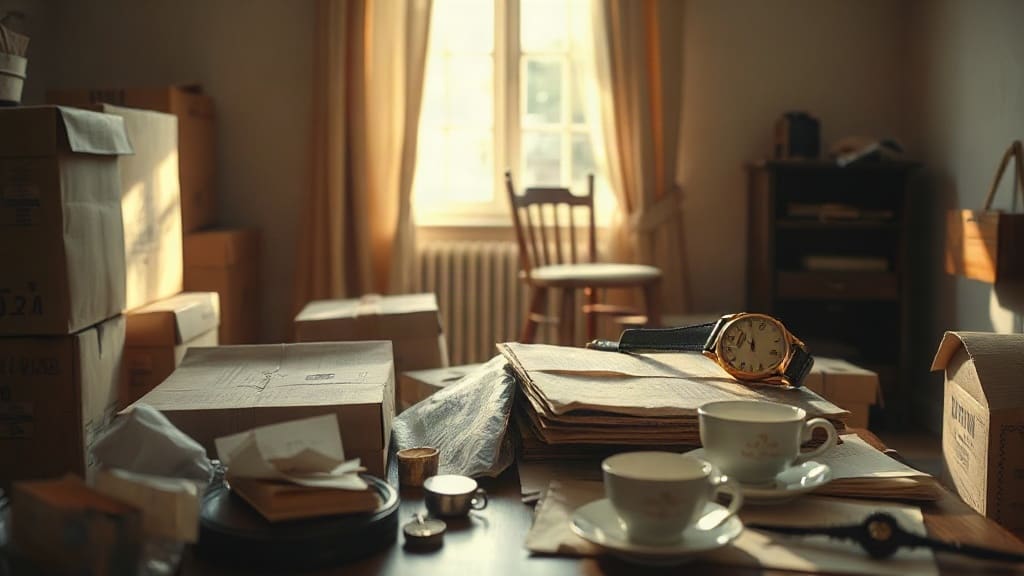
When someone we love dies, the practical tasks that follow can feel like a cruel addendum to grief. Among the hardest is the act of sorting through their belongings. Every object carries a story, a scent, a memory. The decision to keep, donate, or discard can feel like a betrayal or a final act of love. This emotional weight is at the heart of recent conversations about the pain of letting go of a loved one's belongings, sparked by personal accounts that resonate with anyone who has faced this task.
In a recent letter to a national newspaper, a reader described the experience of clearing her mother's house as something she 'sort of enjoyed,' viewing it as 'the last thing that I could do for my mother.' She saw herself as a 'curator in reverse,' carefully distributing items to charity shops and even finding a home for a manual typewriter that one shop rejected. Her perspective offers a counterpoint to the overwhelming sadness that often dominates this process. It suggests that with the right mindset, the task can become a meaningful ritual rather than just a burden.
But for many, the pain is acute. The belongings are not just things; they are extensions of the person. A worn jumper, a favorite mug, a stack of letters. Letting them go can feel like letting go of the person all over again. This article explores the emotional landscape of sorting through a loved one's possessions, offering practical strategies and psychological insights to help you navigate this difficult journey. Whether you are in the midst of it now or anticipating it, understanding the process can make it slightly more bearable.
Why It Hurts So Much
Grief is not linear, and neither is the process of dealing with a person's belongings. The pain arises from several sources. First, there is the symbolic weight of objects. They are tangible proof that the person existed, that they had a life full of preferences, habits, and memories. Touching their things can trigger vivid recollections, both happy and sad. Second, there is the guilt of discarding. Throwing away a parent's belongings can feel like throwing away a part of them, or like you are being disrespectful. Third, there is the pressure of time. Often, the house must be cleared by a certain date, adding logistical stress to an already emotional time.
Psychologists refer to this as 'continuing bonds' theory, which suggests that maintaining a connection with the deceased through objects can be healthy. However, when the volume of belongings is overwhelming, it can hinder the grieving process. The key is to find a balance between honoring the memory and creating space for your own life to continue.
Approaches That Can Help
There is no single right way to do this. Some people prefer to tackle it alone, while others need support. Some want to keep everything, while others find relief in minimalism. The following strategies are drawn from personal experiences and expert advice, and they can be adapted to your own situation.
1. Start with the Easy Stuff
Begin with items that have little emotional attachment: expired medications, old newspapers, broken appliances. Clearing these first creates visible progress and reduces the volume, making the task feel less insurmountable. It also gives you a sense of control before you tackle the more sentimental items.
2. Create a Sorting System
Use three or four categories: keep, donate, discard, and maybe 'undecided.' For the 'undecided' pile, set a time limit. If you haven't missed an item after a few months, you can revisit it with less emotion. Be honest with yourself: if you haven't used it or thought about it in years, it may not need to stay.
3. Tell the Story
As you go through items, share memories with someone who knew your loved one. You might say, 'Remember when Mom wore this to that wedding?' This verbalizes the memory and can make it easier to let go of the physical object. You are transferring the memory from the object to your shared narrative.
4. Repurpose and Display
Not everything has to be stored away. You can turn a favorite shirt into a quilt, frame a piece of jewelry, or use a teacup as a planter. By integrating a few special items into your daily life, you maintain a connection without keeping everything.
5. Donate with Intention
Knowing that your loved one's belongings will benefit others can be a source of comfort. Research charities that align with their values, or give items to people who will appreciate them. One reader found joy in seeing her mother's typewriter displayed in a charity shop window. That act of passing things on can be a positive way to honor their memory.
6. Seek Support
You don't have to do this alone. Ask a friend or family member to sit with you, or hire a professional organizer who specializes in estate clearing. Support groups, both in-person and online, can connect you with others who understand. Sometimes just talking about the difficulty can lighten the load.
The Emotional Rollercoaster
Expect to feel a range of emotions: sadness, anger, guilt, relief, even laughter. It's okay to cry, to take breaks, to leave and come back another day. Don't judge yourself for whatever you feel. There is no timeline for grief, and there is no deadline for sorting through a lifetime of possessions. Give yourself permission to go slowly.
One common feeling is guilt over feeling relief when the task is done. But relief is not a betrayal. It simply means you have completed a difficult chore. It's also normal to feel guilty about keeping things or not keeping enough. Remember that your loved one would likely want you to live your life, not be burdened by their stuff.
When to Keep and When to Let Go
There is no magic formula. Some people keep a whole room as a shrine; others keep only a small box. Both can be valid. Ask yourself: Does this item bring me comfort or pain? Will I use it or just store it? Would my loved one want me to keep this? If you are unsure, put it in a box for a year. If you don't open the box, you can let it go.
For items of financial value, you may need to get them appraised or consult with an estate lawyer. But for most everyday items, the value is sentimental. Focus on the memories, not the objects.
Cultural and Familial Differences
Different cultures have different rituals for dealing with a person's belongings. In some, it is customary to distribute items among family members soon after death; in others, belongings are kept for years. There is no right or wrong. What matters is that you find a path that feels respectful to your loved one and manageable for you.
Family dynamics can also complicate things. Siblings may disagree about what to keep. Try to communicate openly, and if necessary, bring in a neutral mediator. Remember that the goal is not to fight over things but to honor a shared loss.
Frequently Asked Questions
How long should I wait before clearing out a loved one's belongings?
There is no set time. Some people start within weeks, others wait months or years. The right time is when you feel emotionally ready and when practical circumstances allow. If you are feeling pressured by others, it's okay to say you need more time.
What if I can't bear to throw anything away?
That's okay. You can keep everything if you have the space and it doesn't hinder your life. However, if the clutter becomes overwhelming, consider starting with just one drawer or shelf. You can also take photos of items before donating them, so you keep the memory without the physical object.
How do I deal with guilt over donating my parent's things?
Guilt is a common emotion. Remind yourself that donating is often what your loved one would have wanted, especially if they were charitable. You are not throwing away the person; you are passing on their legacy. If it helps, donate to a cause they cared about.
Should I involve other family members in the process?
If possible, yes. Sorting through belongings together can be a shared healing experience. However, if relationships are strained, it may be better to do it alone or with a neutral party. Respect each person's need to grieve in their own way.
What are some creative ways to repurpose belongings?
You can make memory quilts from clothing, turn old jewelry into new pieces, create a photo album from old pictures, or use furniture in your home. The goal is to keep the essence of your loved one alive in a way that fits your life.
The pain of letting go of a loved one's belongings is real, but it is also a testament to the depth of your love. As you navigate this journey, be gentle with yourself. There is no perfect way to do it. You are doing the best you can, and that is enough.